
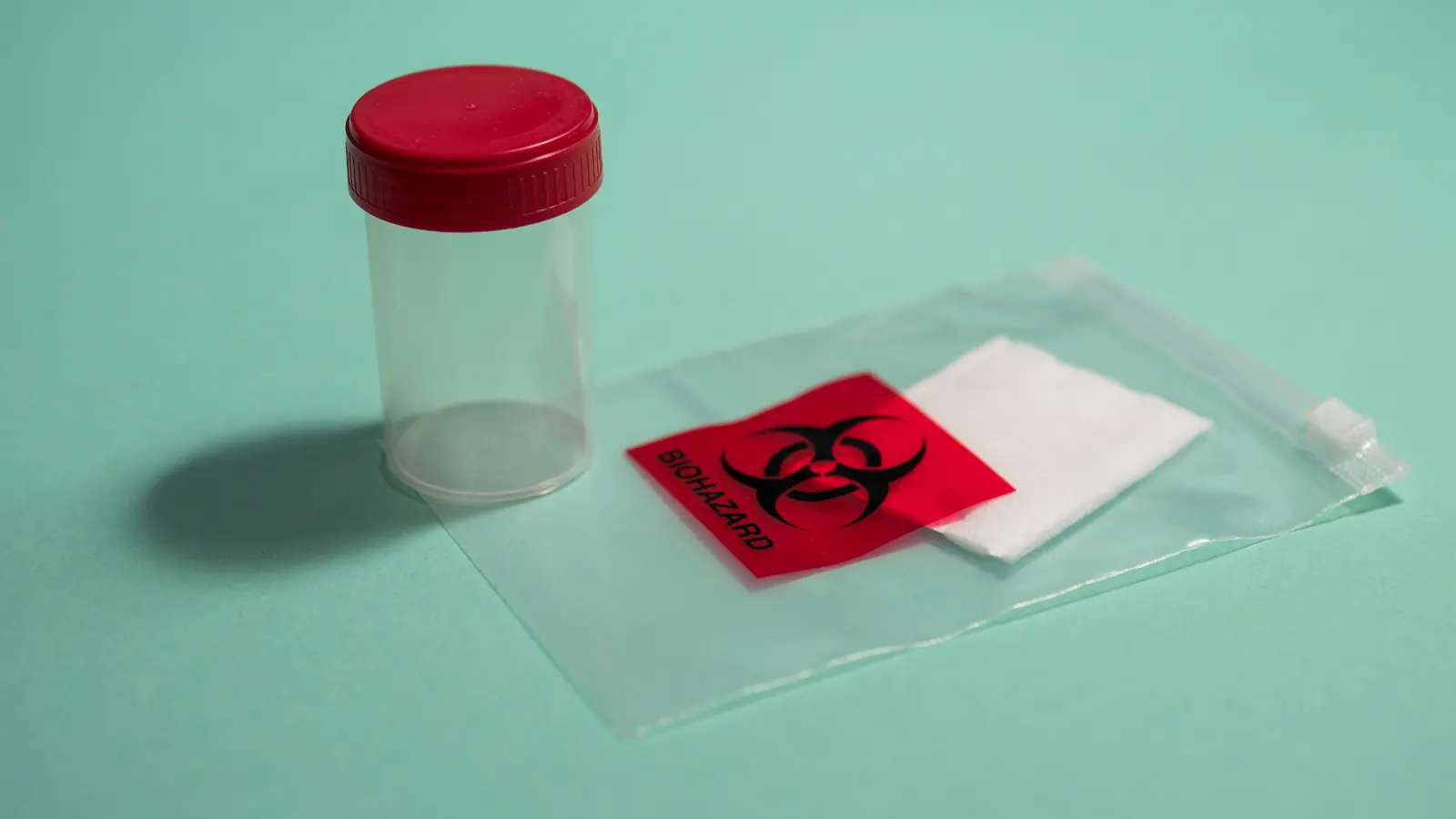
What is clinical waste?
Clinical waste is associated with healthcare activities and may present an infection risk, but not everything used during treatment is automatically infectious clinical waste. Its classification depends on the material, the clinical circumstances and any contamination by medicines or chemicals.
For example, a dressing from a wound assessed as presenting an infection risk differs from a non-infectious dressing with no medicinal or chemical contamination. The latter may fall within the offensive healthcare waste stream, while the former may require classification as infectious clinical waste. The distinction should reflect the actual waste rather than the name of the treatment room or department.
The Environment Agency explains these distinctions in its healthcare waste classification guidance. Further detail on infection-related waste appears under infectious waste collection.
Infectious and offensive waste are not interchangeable
Infectious clinical waste is hazardous where the relevant infection-related criteria apply. In contrast, offensive healthcare waste is non-infectious and does not contain pharmaceutical or chemical substances. It may still require a dedicated waste stream because of hygiene considerations and its origin in healthcare activity.
This difference is particularly important in practices carrying out wound care, minor surgery, diagnostic procedures or routine examinations. The clinical activity alone does not establish the classification of every item generated during that appointment. A suitable segregation process depends on staff understanding which materials require infectious waste management and which do not.
Unnecessary use of an infectious waste stream can increase the amount of material directed towards specialist treatment. Incorrectly placing infectious material into an offensive waste stream creates a different problem because the resulting waste description and route may not reflect its hazardous properties. See offensive waste collection for the separate non-infectious category.
How classification influences disposal
Infectious healthcare waste without pharmaceutical or chemical contamination may be suitable for an authorised alternative treatment process. Waste containing additional chemical or medicinal contamination requires separate consideration because destroying or reducing infectious hazards does not necessarily deal with those other substances.
The NHS Health Technical Memorandum 07-01 describes a healthcare waste management framework, including segregation and sustainable disposal principles. It is healthcare guidance, not a single blanket statute covering every UK business. Statutory duties and applicable waste controls must be considered separately.
Healthcare staff need an understandable process for distinguishing routine non-infectious materials from waste requiring more specialised management. Local procedures, clinical risk information and waste descriptions should be consistent, particularly where different departments or practitioners use the same storage facilities.
Records and responsibilities for clinical waste
A healthcare waste producer is responsible for identifying and describing its waste accurately before transfer. The classification informs the waste documentation and the type of authorised facility that may receive it. For hazardous waste movements in England, the relevant consignment documentation must accompany the waste.
Records are useful beyond the collection date. They allow a practice to review the streams it produces and identify whether a change in clinical activity has affected its waste management requirements. The Environment Agency’s classification guidance sets out the need to assess waste before it is sent for disposal or recovery.
A reliable clinical waste process therefore has three connected elements: a defensible classification, separation of waste in line with that classification and a compatible route for its subsequent management. Healthcare waste classification guidance provides further context on the initial decision.
Questions about clinical waste disposal
Is every blood-stained dressing classed as infectious clinical waste?
Not necessarily. Visible blood or bodily fluid does not, by itself, establish that a dressing meets the criteria for infectious clinical waste. Classification depends on the clinical circumstances, infection risk and any other relevant contamination. Non-infectious healthcare dressings without pharmaceutical or chemical contamination may fall within the offensive waste category.
Can clinical waste be treated without incineration?
Some infectious clinical waste without chemical or pharmaceutical contamination can be managed through an authorised alternative treatment process. Other material, particularly waste contaminated by medicines or certain chemicals, may require a different route. Whether a facility can accept and treat a particular waste stream depends on its authorisation and the waste's characteristics.
Does HTM 07-01 apply to private healthcare providers?
HTM 07-01 is NHS healthcare waste management guidance and can provide a relevant technical framework for private healthcare settings. It should not be described as a stand-alone UK Act or as replacing applicable waste law. A private provider must consider its own activities, classification duties and jurisdiction when establishing waste procedures.