
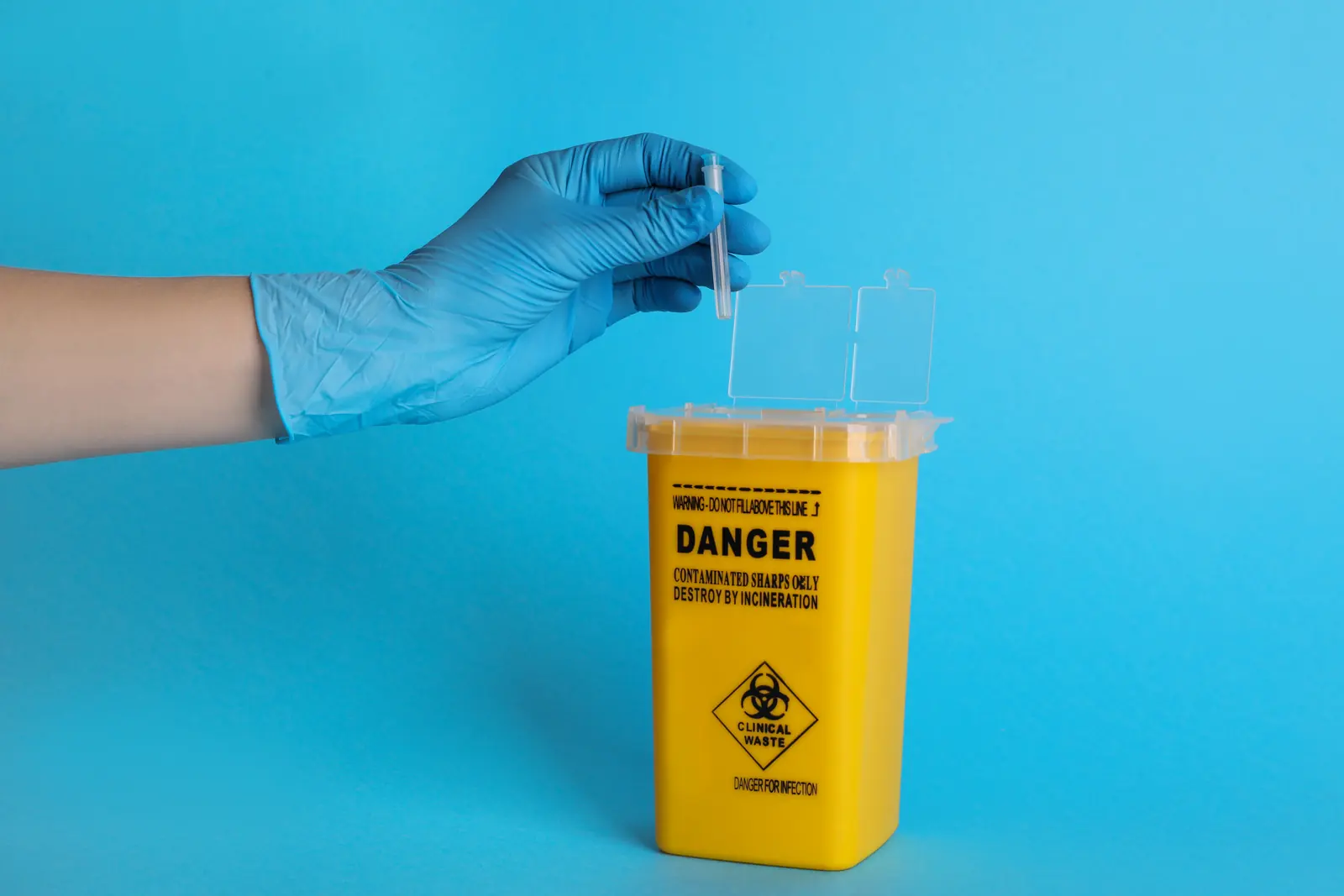
Which items are included in sharps waste?
Sharps waste includes needles, lancets, scalpel blades and other used medical instruments capable of causing a puncture or cut. It arises in GP surgeries, vaccination clinics, dental practices, podiatry services and other settings where invasive procedures are performed.
Sharps present a physical injury risk, but their waste classification also depends on what they have been used for and what may remain on them. A used needle associated with a routine procedure may have different contamination characteristics from a sharp carrying residual medication or one contaminated with a cytotoxic medicine.
The Environment Agency’s healthcare waste guidance distinguishes non-medicinally contaminated, medicinally contaminated and cytotoxic or cytostatic contaminated sharps. These distinctions affect waste descriptions and subsequent management. Practices dealing with medicines should also consider pharmaceutical waste disposal.
Why disposal at the point of use matters
The risk of injury does not begin when a waste container is full. Used sharps can injure clinical staff, cleaners, porters and other people involved in moving or handling healthcare waste. A sharp placed amongst soft waste may be particularly difficult to identify before contact occurs.
The Health and Safety Executive’s guidance on needlestick injuries explains that sharps should be disposed of carefully at the point of use in suitable purpose-designed containers. The arrangement should allow disposal without unnecessary movement of an exposed sharp between work areas.
Staff also need procedures for the temporary closure, final closure and replacement of containers consistent with the container design and applicable instructions. The HSE identifies overfilled containers and sharps not placed in suitable containers as important causes of injury to support staff.
Collection planning for different clinical activities
The number of sharps produced varies considerably between settings. A vaccination session may generate many used needles over a short period, while a podiatry practice or small treatment room may generate smaller amounts across several days. Volume therefore depends on the procedure mix, appointment activity and the number of places where sharps are used.
Collection planning must account for the categories of sharps being generated, the number and location of containers and the space available for holding closed containers before collection. It should also reflect whether particular procedures introduce medicinal or cytotoxic contamination that must remain separate from other sharps waste.
Where several treatment rooms operate independently, the practice needs an accurate picture of its total sharps output rather than relying on the contents of one collection point. Sharps container information covers further container considerations without replacing the need to identify the waste itself.
Documentation and transfer
A waste container’s contents must be described consistently with the underlying waste classification. The producer’s responsibility includes identifying the waste before transfer and providing information sufficient for lawful management.
In England, hazardous waste is moved using consignment documentation. The government’s consignment note guidance describes the information and responsibilities involved. Accurate documentation matters when sharps from different clinical activities have different contamination characteristics.
Collection records also help practices review whether container numbers and collection intervals remain appropriate as activity changes. They provide a way to reconcile closed containers awaiting collection with the waste removed from the premises.
Sharps collection is one part of the wider healthcare waste process. Other materials generated during the same procedure, such as dressings and disposable protective equipment, need classification according to their own characteristics rather than automatically following the sharps route. See clinical waste disposal for those wider distinctions.
Questions about sharps waste collection
Do all sharps require the same disposal route?
No. Sharps may carry different forms of contamination, including infectious material, residual medicines or cytotoxic and cytostatic substances. These characteristics affect classification and the appropriate disposal route. The fact that items are all placed in purpose-designed sharps containers does not mean their contents have identical classifications.
Why are sharps containers needed close to treatment areas?
HSE guidance supports disposing of sharps at the point of use because transporting an exposed sharp creates an avoidable opportunity for injury. Suitable containers should be accessible where the activity takes place. Their placement should reflect clinical work rather than relying on a distant central waste storage area.
What should a practice review when sharps waste volumes increase?
An increase in appointments, vaccination activity or the number of treatment rooms may affect the amount of sharps generated. The practice should review its container provision, the types of contamination involved, the number of closed containers awaiting removal and the collection interval. A change in volume does not eliminate the need to maintain separate classifications.